IM/MUNE
Fabrique virale, Guérilla contre biopolitique et pratiques performatives
https://bodyhacking.fr/
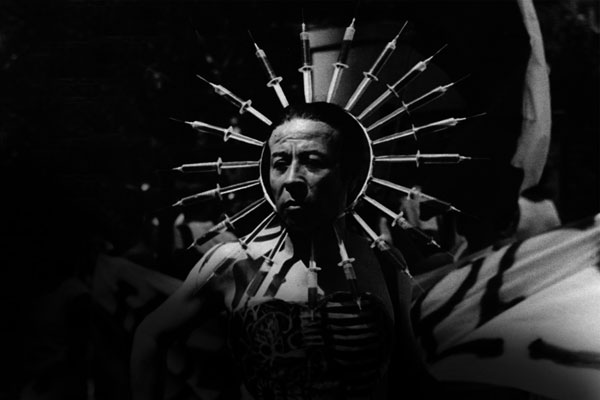
Les années 80 sont perçues comme la fin de la période révolutionnaire qui a agité l’Occident depuis mai 68 : le déclin des mouvements d’émancipation sociale et de l’utopie marxiste aurait cédé la place à un consensus démocratique néolibéral, au sein duquel la croissance économique se substituerait à l’opposition idéologique. Mais les années 80 furent aussi les années de l’invention du SIDA : une période sans précédent d’intensification de la gestion biopolitique du corps et de la sexualité, mais aussi d’invention de nouvelles stratégies de lutte et de résistance à la normalisation.
En 1981, les images des premiers malades de Sarcome de Kaposi apparaissent dans les média. On parle alors du GRID syndrome (Gay related immune deficiency- syndrome d’immunodéficience relative aux gays). Les récits médicaux et médiatiques désignent de nouvelles figures politiques susceptibles de menacer l’immunité du corps social : le primate, l’Afrique, le corps haïtien, l’homosexuel, la prostituée, le junkie…
La maladie construit une cartographie normative et trace des limites nationales et politiques. Entre 1983 et 1984, l’équipe de l’Institut Pasteur et du docteur Robert Gallo disent avoir isolé et identifié le virus d’immunodéficience humaine acquise (VIH). Les rhétoriques de la contamination virale et de la prévention se superposent avec les discours sur l’identité sexuelle et raciale. Le sang, le sperme, la salive, la peau, l’anus…deviennent les nouveaux syntagmes dans les programmes de gestion de la santé publique et les représentations de la culture populaire.
Au milieu des années 80, les collectifs Gay Men’s Health Crisis, ACT UP, AIDES, ou Les Sœurs de la Perpétuelle Indulgence… remettent en cause la gestion gouvernementale, ainsi que les pratiques et discours médicaux et médiatiques autour de la pandémie du Sida. Les artistes Larry Kramer, Gran Fury, Fierce Pussy, Keith Harring, Wojnarowicz, Ron Athey, General Idea, Felix Gonzalez-Torres… interviennent avec des stratégies comme la performance, le zap, le die-in, le kiss-in, ou le détournement….dans la production sociale et politique de la représentation du SIDA. « L’ activisme culturel », selon l’expression de Douglas Crimp, est né. Le combat pour la vie se transforme en lutte pour la représentation culturelle du corps séropositif. Les slogans « PLUS D’IMAGE SANS CONTEXTE » et « SILENCE= MORT » cherchent à lutter contre ce qui s’annonce comme une « épidémie de signification ».
À la lutte performative dans l’espace publique s’ajoute l’activisme pharmacologique: en critiquant les essais cliniques, les activistes en appellent au devoir éthique pour le libre accès à l’AZT. Emerge alors une nouvelle façon de produire du savoir scientifique, de représenter et de construire le corps séropositif vivant. Ces micro-groupes rompent avec les modèles caritatifs, d’assistance médicale, et de développement personnel qui ont dominé jusqu’alors les mouvements de malades. Ici, les modèles de lutte sont empruntés aux collectifs contre la guerre du Vietnam, aux mouvements anti-système, féministes ou de libération sexuelle. Ils n’offrent ni aide, ni assistance aux malades, mais dénoncent la construction politique, scientifique, sociale et économique de la maladie.
Dans les années 90, l’apparition et la commercialisation des antirétroviraux modifièrent non seulement les chances de survie, mais aussi la construction sociale et politique du corps séropositif. Les luttes et les pratiques de critique culturelles et artistiques se transforment elles aussi: aux micropolitiques performatives se juxtaposent de nouvelles micropolitiques collectives d’accès à la production de la représentation de la séropositivité, mais aussi d’accès au savoir (A2K) et au traitement pharmacologique dans un contexte de plus en plus mondialisé.
Face à la crise du Sida, les micropolitiques inventent de nouvelles stratégies de contestation et de résistance qui se sont adaptées aux conditions de production du corps dans le contexte du capitalisme néolibéral : défense d’un savoir activiste face au savoir des experts scientifiques, usage de techniques artistiques, publicitaires et du marketing pour intervenir dans la sphère publique, sabotage des protocoles pharmaceutiques, infiltration des mass media, dépassement des clivages identitaires…la révolution antirétrovirale est en marche.
Les artistes et activistes provoquent un virage épistémologique qui marquera l’histoire micropolitique du vingtième siècle : refusant la position de malades, ils se définissent en tant qu’ experts et usagers du système de santé, ils interviennent dans la production des connaissances scientifiques et remettent en cause la méthodologie des essais cliniques. Ils ont recours à des pratiques artistiques et littéraires pour ouvrir un espace où s’articulent critique de la norme sociale, prévention, savoir expert, pratiques de survie, deuil et plaisir. Une pluralité des styles politiques oppose différentes redéfinitions du corps immune, de la prévention et de la survie. En France, les tensions entre imposition du préservatif et bare-backing, entre prophylaxie et seropride, entre pénalisation de la contamination et défense radicale de la « liberté sexuelle », entre responsabilité et résilience cristallisent dans l’antagonisme entre Act Up et Guillaume Dustan. Pendant ce temps, un changement de modèle pharmacologique s’opère qui viendra transformer les termes du débat.
La possibilité d’un usage préventif du traitement avec des antirétroviraux pour limiter la transmission horizontale est aujourd’hui au centre des débats médicaux, pharmaceutiques et économiques. Dans les années 2000, les nouveaux traitements antirétroviraux opèrent au moins sur deux niveaux: d’une part, ils préservent l’immunité du corps séropositif ; d’autre part, ils sont des outils pharmacologiques de prévention permettant aux personnes séropositives de ne plus transmettre le virus. On est en train de passer de la prévention orthopédique (a travers l’usage du préservatif) à la prévention pharmacologique dans un contexte d’économie mondialisée. Mais l’épidémie ne construit pas les même corps en Europe, en Chine ou en Afrique. En même temps, on glisse progressivement d’une gestion du « corps contaminant » et des « pratiques à risque » vers une gestion (utopique/dystopique) d’immunité totale, d’épidémie généralisée, de dépistage planétaire et de traitement préventif universel.
La notion de biopolitique que Foucault mobilise en 1975 pour penser les processus de gestion de la vie et le « gouvernement des corps libres » dans les régimes disciplinaires prend une nouvelle signification avec l’émergence du SIDA. Si, à chaque modèle de pouvoir correspond un modèle de corps malade, de gestion de la vie dans la ville, et une utopie d’immunité nationale et politique, quel est, après la peste et la syphilis, le modèle de pouvoir qui caractérise la société du SIDA ?
Nous sommes face à une mutat ion des techniques de gestion du corps aussi bien séropositif que séronégatif qui demande de nouveaux discours et de nouvelles stratégies culturelles et micropolitiques de lutte non seulement contre l’épidémie mais aussi contre son idéal politique d’immunité. Comment agir face à ces nouvelles politiques d’immunité ? Devons-nous encore parler de sérodifférence, ou sommes-nous plutôt tous construits par un même régime immunitaire? Comment repenser autrement le corps commun ? Quelles sont les normes politiques, raciales, de genre et sexuelles imposées par le modèle politique et esthétique du corps immune ? Quelles sont les leçons d’immunité que les mouvements féministes, gay, queer, trans et du handicap pourront tirer des pratiques artistiques, culturelles et micropolitiques de lutte contre le SIDA ? Comment construire un corps vivant dont l’idéal politique ne soit pas l’immunité nationale, raciale, sexuelle et du genre ?
Béatriz Préciado
Transpalette Centre d’Art Contemporain et Ecole Nationale Supérieure d’Art de Bourges :
Du 8 novembre au 27 novembre 2011
Programme:
Mardi 08, mercredi 09 & jeudi 10 novembre
21h – 00h Séminaire Open the pill
politiques de l’immunité et luttes antirétrovirales dirigé par Béatriz Préciado
Amphithéâtre ENSA Bourges
Du vendredi 11 au dimanche 27 novembre
Dis.positif Im/mune
archives et ressources, contaminations activistes et artistiques
avec Dana Wyse, Act Up Paris, Le peuple qui manque, Claude Lévêque, Nicolas Floc’h,
les Sœurs de la Perpétuelle Indulgence, Shayo Detchema,…
Le Transpalette / Centre d’art contemporain
Vendredi 11 novembre
18h – 20h Ouverture dis.positif Im/mune
bénédiction par les Sœurs de la Perpétuelle Indulgence
20h30 – 22h Cinéforum Im/mune 1 présenté par les Sœurs de la Perpétuelle Indulgence
à partir de 22h Performances, lectures, musique
avec Patrick Vidal, La Bourette, Jenny Bel’Air,
Victor Marzouk, Dj Wet,…
à partir de 22h : 8€ – adh/étudiants/chômeurs : 5 €
Samedi 12 novembre
15h – 18h Workshop Im/mune 1
avec les Sœurs de la Perpétuelle Indulgence
15h – 18h Workshop Im/mune 2
« Fabrique Perceptive »
avec Isabelle Ginot et Carla Bottiglieri
22h – 02h Soirée Im/mune 1 : performances, lectures, musique
avec Patrick Vidal, La Bourette, Jenny Bel’Air, Victor Marzouk, Dj Wet,…
Mercredi 23 et Jeudi 24 novembre
20h30 – 22h Cinéforums Im/mune 2 et 3 présentés par Le peuple qui manque
Vendredi 25 novembre
10h – 17h Workshop Im/mune 2 avec Oreet Ashéry
20h – 23h Conférences Open the pill
avec Roberto Esposito, Grégoire Chamayou et Béatriz Préciado
à partir de 23h Mix DJ Kraophic
Samedi 26 novembre
10h – 17h Workshop Im/mune 3
avec Oreet Ashéry
17h – 02h Soirée Im/mune 2
performances, conférences, musique
avec Elisabeth Lebovici, Oreet Ashéry, Nathalie Magnan,
Mark Tompkins, Gaëlle Krikorian, Ron Athey, Zerocrop + Dj Kifoof’n
Dimanche 27 novembre
11h – 15h Brunch de clôture et présentation projet 2012
Informations complètes
https://bodyhacking.fr/